Track obligations across frameworks
Regulatory Compliance Solutions
Regulatory compliance, from obligation to disclosure
Monitor regulatory change, map requirements to controls, manage evidence, and verify disclosures with AI-powered workflows.
Centralize controls and evidence
Save up to 75% of disclosure verification time
Compliance Dashboard
Live Regulatory Intelligence
142 Active
Regulation
Monitor sources
Control
Map obligations
Evidence
Centralize proof
Disclosure
Verify outputs
500+
+12%
Sources monitored
24
Active
Obligations mapped
100%
Secure
Audit trail
98.2%
+2.1%
AI-verified
The challenge
Why compliance teams struggle
Constant regulatory change
Frameworks, circulars, and standards evolve faster than teams can interpret.
Disconnected systems
Policies, controls, and disclosures live in separate places without traceable links.
Slow, expensive reporting
Verification cycles eat weeks of senior reviewer time before submission.
Audit and disclosure risk
Fragmented evidence makes audit and reviewer challenges hard to defend.
>20%
of listed companies disclosed non-compliant report
<5%
of operators are ready for regulatory audit
60%
of firms rely on spreadsheets for compliance
Core workflow
One workflow for ongoing compliance and high-stakes disclosures
Step 1
Diligence
Monitor requirements
Continuously track circulars, standards, and frameworks across jurisdictions.
Alert feed
HKMA SPM CG-5 update
SFC Code 14.3 amendment
IFRS S2 climate refresh
Step 2
Diligence
Map obligations
Translate requirements into structured controls, owners, and policies.
Control checklist
Board reporting cadence
Senior manager attestation
Risk appetite review
Step 3
Diligence
Manage evidence
Centralize source documents, attestations, and audit trails in one vault.
Evidence vault
Board minutes — Q1
Risk committee deck
Internal audit memo
Step 4
Factify
Verify disclosures
Annotate and source-check prospectuses, annual reports, and ESG disclosures.
Verification panel
Page 24 — claim verified
Page 47 — needs source
Page 92 — version mismatch
Platform · Diligence
95%
compliance rate
15×
faster audit response
60%
cost savings
Explore Diligence
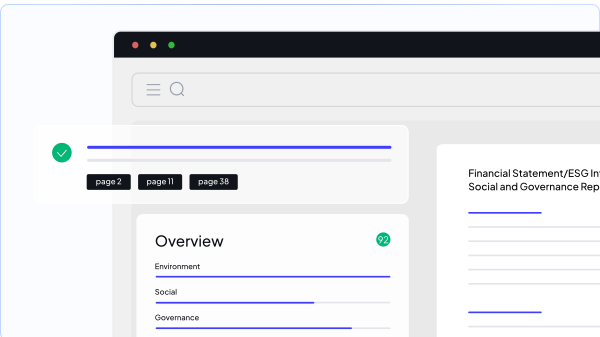
Diligence keeps governance and controls aligned
From circular to control to audit response — Diligence connects regulatory change to the policies, controls, and evidence your team relies on.
Platform · Factify
Explore Factify
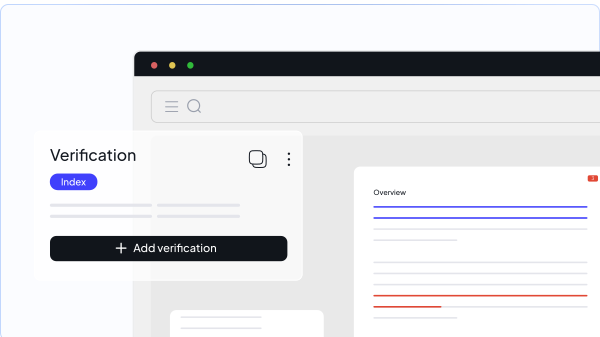
Factify verifies disclosures before they go out
Verify prospectuses, annual reports, and ESG disclosures against their underlying sources — with evidence linked to every claim.
Save up to 75%
of verification time on regulated disclosures
By team
Built for cross-functional compliance teams
Finance & Legal
Primary jobs- Annual & interim reporting
- Listing and prospectus drafting
- Disclosure review and sign-off
Manage evidence · Verify disclosures
Defensible disclosures with source-linked verification on every claim.
Risk & Compliance
Primary jobs- Regulatory monitoring
- Obligation-to-control mapping
- Audit response coordination
Monitor requirements · Map obligations
Prioritized obligations and traceable controls across jurisdictions.
Sustainability & IR
Primary jobs- ESG disclosure preparation
- Framework alignment (IFRS S2, ISSB)
- Investor communications
Manage evidence · Verify disclosures
Faster ESG drafting cycles with framework-aligned, audit-ready output.
See how these teams come together
Explore Wizpresso's solutions for Enterprises & Professional Services.
Use cases
Common regulatory workflows
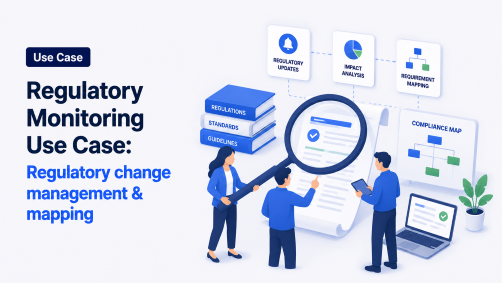
Regulatory Monitoring
Regulatory change management and mapping
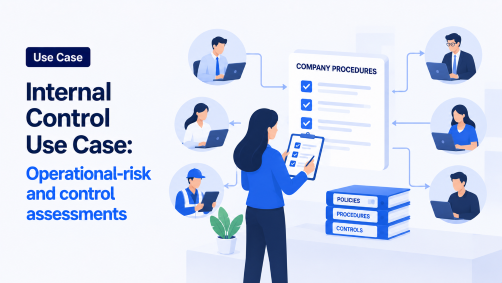
Internal Control
Operational-risk and control assessments
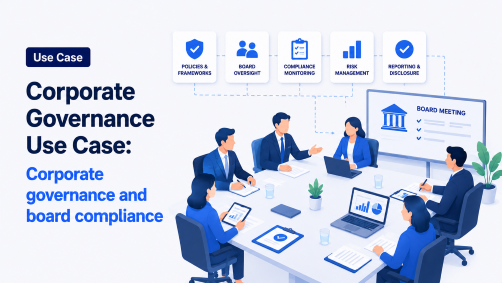
Reporting Compliance
Corporate governance and board compliance
When Compliance Work Sprawls, Readiness Slips
A regulatory update lands. An auditor sends a questionnaire. A business team asks whether
Putting Regulatory and ESG Compliance on Autopilot: A CFO Guide to Wizpresso Diligence
CFOs are now responsible for far more than financial reporting. They must demonstrate control over r
Putting Security and Regulatory Compliance on Autopilot with Wizpresso Diligence
As a CISO, you are accountable not only for cyber resilience, but also for proving that your securit
Operational Compliance 2.0: From Regulatory Overload to AI-Driven Audit Automation
Operational compliance is under intense pressure from regulatory change, audit scrutiny, and cyber and resilience expectations, pushing organisations to rethink
Trust & governance
Designed for control, transparency, and audit readiness
Version control
Every draft, comment, and approval tracked.
Audit trails
Source-linked records of who saw and changed what.
Role-based workflows
Granular access for reviewers, approvers, and auditors.
Secure infrastructure
Enterprise-grade controls and deployment options.